Why Fast Ductless AC Repair Matters in Bellevue Homes
When your ductless ac repair bellevue system stops working right, you don’t want to wait around. Here’s what matters most:
Emergency Signs Requiring Immediate Repair:
- Unit blowing warm air instead of cool air
- No airflow from indoor units
- Water leaking from the system
- Strange grinding or squealing noises
- Ice buildup on coils
- Electrical burning smells
Quick Actions to Take:
- Check your thermostat settings and remote batteries
- Inspect air filters for clogs or dirt
- Ensure outdoor unit isn’t blocked by debris
- Call a certified technician for complex issues
Bellevue homeowners love ductless AC systems for good reason — they’re energy-efficient and give you zoned comfort without tearing up your walls for ductwork. These mini-splits cool individual rooms on their own schedule, which makes them a great fit for older homes or additions where ductwork just isn’t practical.
The catch? When something breaks, that targeted comfort disappears fast. A central air system might limp along and cool the whole house unevenly, but a broken ductless unit knocks out comfort in a specific zone entirely — one room’s fine, another’s stuck at 80 degrees.
Here’s the good news: most ductless AC problems get diagnosed and fixed same-day by an experienced technician. Clogged filter choking off airflow? Refrigerant leak sapping your cooling power? Electrical gremlins shutting the system down? Whatever it is, professional repair usually gets things back on track quickly.

Is Your Ductless AC Failing? Common Problems and Their Symptoms
Picture this: you’re settling in for a quiet evening at home, and something feels off. Your usually whisper-quiet ductless system is making noise it shouldn’t, or it’s blowing air that’s warm instead of cool. Don’t panic — but don’t shrug it off either.
Ductless ac repair bellevue calls almost always start with a small warning sign that’s easy to write off as a fluke. Truth is, your system’s actually pretty good at telling you something’s wrong. You just have to be paying attention.
These units are built for reliable, zone-by-zone comfort, so when one starts acting up, you feel it fast. Unlike central air, which can sometimes struggle along quietly for a while, ductless units tend to show their symptoms pretty clearly.
Here’s what your system might be telling you: weak or no airflow even though it’s running; the unit blowing warm air when you’re expecting cold; strange noises — grinding, squealing, banging — that weren’t there before; unpleasant odors, whether musty, moldy, or something burning; water dripping onto your floor from the indoor unit; ice forming on the coils where it has no business being; and those higher energy bills that show up even though your habits haven’t changed.

Common Signs You Need Ductless AC Repair in Bellevue
When your ductless system can’t keep pace with Bellevue’s ever-changing weather, insufficient cooling is usually the first red flag. You’ve dialed in the thermostat, but the room just won’t get there. Just as annoying is uneven temperatures from room to room — your bedroom’s an icebox while the living room feels like a sauna.
More often than not, the real problem is something simple: blocked air filters. Once dust, pet hair, and everyday debris clog things up, your system can’t push air properly. Imagine trying to breathe through a dirty sock — that’s basically what your unit’s dealing with.
Refrigerant issues are a bigger deal and need a professional’s attention. When refrigerant levels drop because of a leak, your system loses its cooling power altogether. The unit might run nonstop and still never hit your target temperature. This one’s not a weekend DIY project — refrigerant work requires special certification and handling.
Electrical faults can cause anything from spotty operation to a full system shutdown, and these problems tend to snowball if you wait. If any of this sounds familiar, our team specializes in Air Conditioning Repair Bellevue and can get things sorted quickly.
Water Leaks and Icing: What Do They Mean?
Few things ruin your day faster than finding water dripping onto your hardwood floors from your ductless unit. These systems are designed to handle moisture without any drama, so a visible leak is a sign something’s genuinely wrong.
The usual culprit is a clogged drain line. As your AC pulls humidity out of the air while cooling, that moisture has to go somewhere. When algae, dirt, or debris clog the condensate drain, water backs up and finds its own way out — typically straight onto your floor.
Ice buildup on the coils is another sign worth taking seriously. This usually happens when refrigerant levels run low or airflow gets badly restricted. Low refrigerant pressure lets the coils get too cold, freezing moisture right onto them. A dirty filter or a fan that’s not pulling its weight causes the same thing — the coils can’t absorb heat properly, so ice starts forming.
Left alone, both problems can do real damage. Water eats away at walls, flooring, and furniture, while ice can wreck the more delicate parts inside your system.

Strange Noises and Odors Explained
Ductless systems are known for one thing above all — how quiet they run. So when your peaceful home suddenly sounds like a construction zone, that’s your cue that something needs attention.
Grinding or squealing usually traces back to fan motor issues or worn bearings. These noises tend to start subtle and get louder the longer you wait. Banging or rattling might mean something’s come loose, or a fan blade’s hitting something it shouldn’t be.
Don’t brush these off — they almost never fix themselves, and ignoring them tends to turn a cheap repair into an expensive one.
Odd smells deserve just as much attention, especially since they can affect your family’s health, not just your comfort. A musty or moldy smell usually points to mold or mildew growing somewhere inside, often wherever moisture’s been sitting too long — a byproduct of dirty filters or drainage problems.
A burning smell is a different story entirely and could mean electrical trouble — overheating wires or components. If you catch a whiff of anything burning, shut the system off right away and call for service.
These aren’t just comfort issues — they can affect your indoor air quality and even your family’s safety. Keeping your Ductless AC Units Bellevue clean and running well protects both your home and your health.
A Homeowner’s Troubleshooting Checklist Before Calling for Service
Before you reach for the phone, take a breath. Sometimes a ductless ac repair bellevue problem has a surprisingly easy fix. Think of the next few steps as a little detective work — the kind that might get your comfort back without waiting on a service call at all.
We get how frustrating it is when your system won’t cooperate, especially on a warm Bellevue afternoon. But you’d be surprised how often a five-minute DIY check solves what looked like a big problem. These steps won’t catch everything, but they’ll either get you back to comfort or give our technicians a head start if you do need us out there.
Safety first, no exceptions. Before you touch anything on the unit, cut the power at the breaker. We’d rather you stay comfortable than get hurt.

Step 1: Check Power and Thermostat Settings
Yes, this sounds almost too basic to mention — but you’d be amazed how often it’s the fix. Start with your thermostat programming. Is it actually set to “cool”? Settings get bumped or switched by accident more often than you’d think. Confirm the target temperature is set below what the room actually feels like right now.
Next, check your remote control. Dead batteries are a classic culprit here — swap in fresh ones before you assume anything’s actually broken. If the remote feels sluggish or just won’t respond, that’s usually your answer.
Then move on to the power supply. Head to your electrical panel and find the dedicated circuit for your ductless system. A tripped breaker will sit in the middle position or flip to “off” outright. Try resetting it once. If it trips again immediately, stop — that’s a sign of an electrical problem that needs a professional, not repeated resets.
Step 2: Inspect and Clean Your Air Filters
This is where you can genuinely move the needle on performance. Dirty air filters are, hands down, the top cause of weak cooling we run into around Bellevue. Once dust, pet hair, and everyday particles clog things up, your system just can’t push air through properly — like trying to breathe through a thick blanket.
Make monthly filter cleaning part of your routine, especially through summer when the system’s working overtime. It’s easier than it sounds. Open the front panel on your indoor unit (check your manual for the exact steps) and pull the filters out gently.
From there, vacuum them clean or rinse with lukewarm water and a bit of mild soap. If you wash them, let them dry completely before putting them back — a wet filter invites mold and can damage the system. This one small habit often restores proper airflow and gets your Mini Split Bellevue system back to full strength.
Step 3: Ensure the Outdoor Unit is Clear
Your outdoor unit needs room to breathe, just like you do. Over time, leaves, grass clippings, and general debris pile up around the compressor, especially during Bellevue’s growing season. Once airflow gets blocked, the system has to work harder and still can’t cool as well.
Take a walk outside and give your outdoor unit a good look. Clear away anything growing too close — aim for about two feet of clearance on every side. Pull leaves out of the fins, cut back any overgrown bushes, and make sure nothing’s sitting on top blocking the fan.
Debris buildup like this is more common than people realize, and clearing it can noticeably improve efficiency. Same principle applies whether you’ve got a ductless system or a Heat Pump Bellevue — the outdoor unit needs airflow to do its job right.
If none of this solves your cooling problem, or you spot something that looks off during your inspection, that’s your cue to call in a professional. Either way, you’ve done some useful groundwork that’ll help speed up the actual repair.
The Professional Process for Ductless AC Repair in Bellevue
When DIY troubleshooting doesn’t cut it — or you’re facing something bigger, like a refrigerant leak, electrical trouble, or those noises we mentioned earlier — it’s time to call in reinforcements. At Green City Heating and Air Conditioning, we know calling for help can feel like giving up on the DIY route, but some jobs really do need an expert.
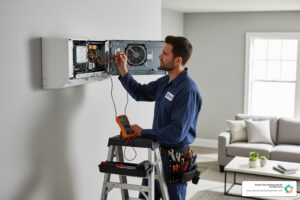
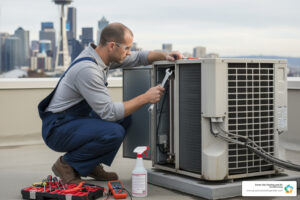
Our technicians show up with diagnostic tools that catch what the naked eye can’t — refrigerant gauges, electrical multimeters, thermal imaging cameras that show exactly what’s happening inside your system. More than that, we bring over 30 years of experience, which means we’ve likely already seen whatever’s going on with your ductless ac repair bellevue situation.
Safety comes first, for your household and for our crew. We follow strict industry standards and local codes, so every repair gets done right the first time. When you’re working with electrical parts and refrigerant, there’s no room to guess.

Why a DIY Approach to Ductless AC Repair in Bellevue Can Be Risky
We love seeing homeowners take pride in their systems — cleaning filters, clearing debris, keeping an eye on things. But complex ductless ac repair bellevue work is a different animal, and there’s a real line between helpful upkeep and something that can genuinely go wrong.
Refrigerant handling is probably the biggest risk of all. It takes special certification to handle these chemicals legally and safely. Get it wrong, and you’re looking at environmental damage, chemical exposure, or fines from environmental agencies — this isn’t just about finishing the job, it’s about doing it the right way.
Then there’s the electrical side. Ductless systems run on high voltage, and one wrong move can mean a serious shock. We’ve seen plenty of well-intentioned homeowners accidentally damage a component, turning a small fix into a much bigger, costlier repair.
Here’s something a lot of people don’t realize: DIY repairs often void your manufacturer’s warranty. That means if something breaks down the line, you’re footing the bill for repairs that would’ve otherwise been covered. We’ve also seen situations where a homeowner’s own repair attempt made things worse — turning a minor fix into a major one.
Our customers keep telling us choosing professional service was the right call. Don’t take our word for it — see what our customers are saying.
What to Expect During a Professional Service Call
When you call Green City Heating and Air Conditioning for ductless ac repair bellevue, you’re getting more than a quick patch job — you’re getting a full service experience built to solve the problem and stop it from coming back.
Our technician starts with a full system inspection, going over both the indoor and outdoor units. We look for the obvious stuff, sure, but also the subtler signs that an untrained eye would miss — electrical connections, proper drainage, the overall condition of the system.
From there comes the diagnostic phase, where our equipment does the heavy lifting: testing refrigerant pressure, checking electrical components with precision tools, measuring airflow. This is what lets us figure out not just what broke, but why it broke in the first place.
We take clear communication seriously. Once we’ve found the problem, we’ll explain it in plain English — no confusing jargon, no runaround. We’ll walk you through the repair options and answer whatever questions you have before we touch a single part. You won’t be left guessing about what’s happening with your system.
Whether it’s a quick component swap or something more involved, we work efficiently to get your comfort restored. Our goal is simple: fix it right the first time. For broader HVAC needs, check out our HVAC Repair Bellevue services.
Repair vs. Replace: When to Consider a New System
Sometimes the most honest conversation isn’t about how to fix your system — it’s about whether fixing it even makes sense. It’s a balancing act between a few key factors, and we’re here to help you land on the right call for your home and your budget.
System age is usually the biggest factor. Most ductless systems last around 20 years with proper care. If yours is nearing or past that mark, you might be entering the stage where repairs get more frequent and more expensive. It’s a bit like an aging car — eventually you’re pouring more into repairs than the thing’s actually worth.
How often you’re calling for repairs tells its own story too. If you’re on the phone with a technician multiple times a year, or repair bills keep showing up, it might be time to think about replacing rather than repairing. We’ve worked with homeowners spending hundreds a year keeping an old system limping along that could’ve been replaced with something more efficient and reliable.
Modern ductless systems bring real gains in energy efficiency. If yours is over a decade old — even if it’s still technically working — you could be overpaying on utilities every month. A newer system can often pay for itself through the energy savings alone.
And sometimes the issue traces back to the original install. An incorrectly sized unit will struggle no matter how well you maintain it. Oversized systems short-cycle — turning on and off too fast to properly dehumidify. Undersized ones run nonstop and never quite hit your target temperature. In either case, swapping in a properly sized system can make a real difference in both comfort and efficiency.
We’ll walk through your situation honestly and give you a straight answer on whether repair or replacement makes more sense. If replacement turns out to be the better move, take a look at our Air Conditioning Installation Bellevue services to see your options.
Frequently Asked Questions about Ductless AC Repair
We field questions from Bellevue homeowners about their ductless systems pretty much every day. After years of service calls, the same handful of concerns keep coming up. Let’s dig into the big ones.
Why is my ductless unit not cooling the room effectively?
This is by far the most common complaint we hear, and it’s genuinely frustrating when you’re expecting cool relief and getting anything but. The good news — most of the time, it’s something we can fix without much trouble.
Dirty air filters are usually the first suspect. Think about trying to breathe through a thick, dusty blanket — that’s essentially what your system’s up against once filters get clogged with dust, pet hair, and debris. The unit’s working hard and getting nowhere, like running on a treadmill with the resistance cranked way too high.
Low refrigerant is the other major culprit behind weak cooling. Refrigerant is basically the lifeblood of your ductless ac repair bellevue system — it’s what actually produces the cold air. When there’s a leak somewhere, the unit might keep running and blowing air, but that air won’t be nearly as cool as it should be. You’ll notice the difference right away.
Sometimes the issue isn’t the unit at all — it’s how it was sized for the space in the first place. A system that’s too big will cool the room fast and shut off before it can properly dehumidify, leaving things feeling clammy. One that’s too small will run around the clock and never quite catch up — like trying to fill a pool with a garden hose.
The upside? A professional diagnosis usually pins down the exact cause fast, so you’re not left guessing.
How often should I have my ductless AC system professionally maintained?
Ductless systems are pretty low-maintenance compared to traditional HVAC — but “low” isn’t the same as “none.” We recommend professional maintenance at least once a year to keep everything running the way it should.
Think of it like an annual physical. You might feel fine, but a checkup catches the small stuff before it snowballs into something expensive. During a maintenance visit, we clean the parts you can’t easily reach, check refrigerant levels, test the electrical connections, and make sure everything’s calibrated properly.
Regular maintenance does more than just prevent breakdowns, though that’s a nice bonus. It keeps your system running efficiently — lower energy bills, better comfort day to day. A well-maintained ductless system can also last close to twenty years, so that one visit a year is really a long-term investment.
We’ve seen too many systems that could’ve been saved with regular upkeep but ended up needing major repairs — or full replacement — instead. Don’t let that be your story.