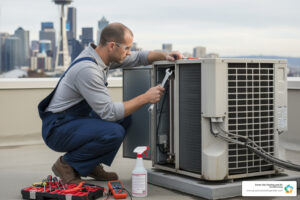
When Your Comfort Can’t Wait
24 hour HVAC Seattle services are essential when your heating or cooling system fails at the worst possible moment. Whether it’s a furnace breakdown during a freezing winter night or an air conditioner failure during Seattle’s rare but intense summer heat, emergency HVAC help is just a phone call away.
When you need immediate help, you need a provider you can trust. Look for a company with a proven track record of fast, reliable same-day service, available 24/7, 365 days a year. At Green City Heating and Air Conditioning, we’re ready to answer your call anytime.
When your HVAC system breaks down unexpectedly, time matters. Seattle’s damp winters and occasional summer heat waves put serious strain on heating and cooling systems. A furnace failure during a snowstorm isn’t just uncomfortable—it can be dangerous for your family’s health and safety.
The good news? Seattle has experienced HVAC professionals ready to respond any time of day or night. As one satisfied customer shared: “My furnace stopped working during a snowstorm and they responded the same night, fixing it within a couple of hours.” This rapid response can mean the difference between a minor inconvenience and a major disaster.

Why Immediate Response Matters
Imagine a typical Seattle winter night when your furnace suddenly goes silent, or a hot summer day when your air conditioner gives up. These aren’t just inconveniences; they’re emergencies that demand immediate attention.
HVAC systems work hardest during extreme weather, which is when they’re most likely to fail. This strain can lead to unexpected breakdowns. Without prompt intervention, a minor issue can escalate into significant system damage, leading to costly repairs or a full system replacement.
More importantly, your family’s safety is at stake. Extreme temperatures can pose health risks, especially for the elderly or young children. A malfunctioning furnace could lead to carbon monoxide leaks, while an AC electrical issue could become a fire hazard. That’s why an immediate response from a 24 hour HVAC Seattle service is a necessity for a safe home. We believe your emergency is our emergency, ensuring you get dependable attention immediately.
Recognizing an HVAC Emergency in Seattle’s Climate

Seattle’s climate keeps HVAC systems working year-round. Our damp, chilly winters demand reliable heating, while intense summer days test your cooling system. This constant use creates unique challenges, as the Pacific Northwest’s moisture can cause rust and mold, and frequent temperature swings lead to more wear and tear.
This is why we recommend annual maintenance for Seattle homeowners, ideally in the spring or fall. But even with the best care, emergencies happen. The key is knowing when to call for 24 hour HVAC Seattle help versus when an issue can wait.
Common Heating Emergencies
Some heating problems can’t wait. No heat production is the most obvious emergency—if your furnace runs but blows cold air, or no air at all, you need immediate help.
Furnace failure and pilot light issues are common, especially in older systems. If your pilot light won’t stay lit or the electronic ignition fails, your home will get cold fast. This could be a simple fix or a sign of a faulty control board needing professional attention.
Pay attention to strange noises from your furnace. Rattling, banging, or squeaking often means a part is loose or broken. Ignoring these sounds usually leads to bigger, more expensive problems.
The most serious emergency involves gas or carbon monoxide smells. If you smell rotten eggs (natural gas) or experience headaches, dizziness, or nausea near the furnace, evacuate immediately and call emergency services, then contact your HVAC provider.
When facing these heating crises, professional help is just a call away with our Furnace Repair in Seattle, WA service.
Common Cooling Emergencies
When summer heat hits, a broken air conditioner is an emergency. No cool air production—when your AC runs but pushes warm air or has stopped entirely—requires immediate attention.
An AC unit that won’t turn on could be anything from a tripped breaker to internal component failure. A professional diagnosis is the fastest way to restore comfort.
Refrigerant leaks are an environmental concern and can kill your system. Hissing sounds or poor cooling performance are key signs. Without proper refrigerant levels, your system can’t function and may suffer permanent damage.
Watch out for frozen evaporator coils. Ice on your indoor unit, even on hot days, usually indicates restricted airflow or low refrigerant. Continuing to run the AC could damage the compressor.
Electrical issues like flickering lights, burning smells, or tripped breakers are always emergencies. Shut the system down immediately and call for help to avoid a potential fire hazard.
For fast relief from any cooling emergency, our team provides 24 Hour AC Repair Service in Seattle, WA whenever you need it most.
What to Expect from a 24 Hour HVAC Seattle Service

When your HVAC system quits at 2 AM, you need to know what happens next. A reliable 24 hour HVAC Seattle service turns a stressful situation into a manageable one. At Green City Heating and Air, we’ve built our emergency response around one idea: your emergency becomes our emergency.
When you call us, you get our skilled, in-house technicians who arrive fully equipped with the tools and parts for most common repairs. Our technician will quickly identify the problem, explain it in plain English, and provide an upfront quote before any work begins. No surprises or hidden fees.
The Emergency Call Process
Making an emergency call is straightforward. When you reach our 24 hour HVAC Seattle team, our customer service staff will get straight to helping you.
During information gathering, we’ll ask a few key questions about your system and the problem. This helps us dispatch the right technician with the right tools.
Technician dispatch happens fast. We aim for same-day response for Seattle-area emergencies. One recent customer told us we \”came out to our house quickly and got everything done within an hour or so\””—that’s the standard we aim for.
Response times vary